Project Bluebell
Hero Build: 1951 Ford F‑4 Stake Body “Fat‑Fendered” Tow Truck
This season’s hero build is a 1951 Ford F‑4 stake body truck—part of Ford’s first post‑war “fat‑fendered” F‑Series line, a medium‑duty workhorse rated for around 10,000 pounds with dual rear wheels and a four‑speed manual. These trucks were among the first fully redesigned F‑Series after World War II, with fresh sheet metal, a wider cab, improved mounts, and some of the last flathead V8 powerplants to go into Ford trucks.
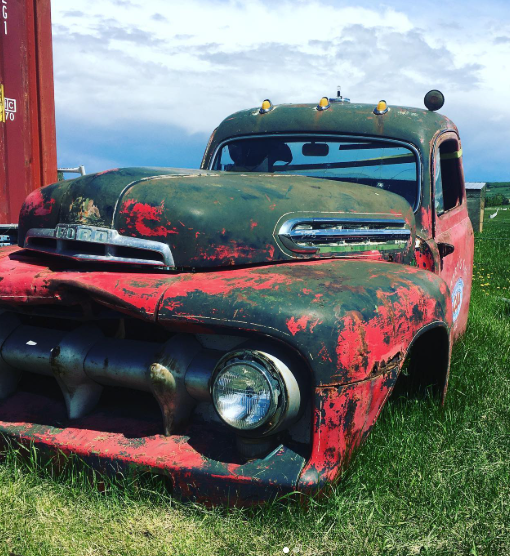
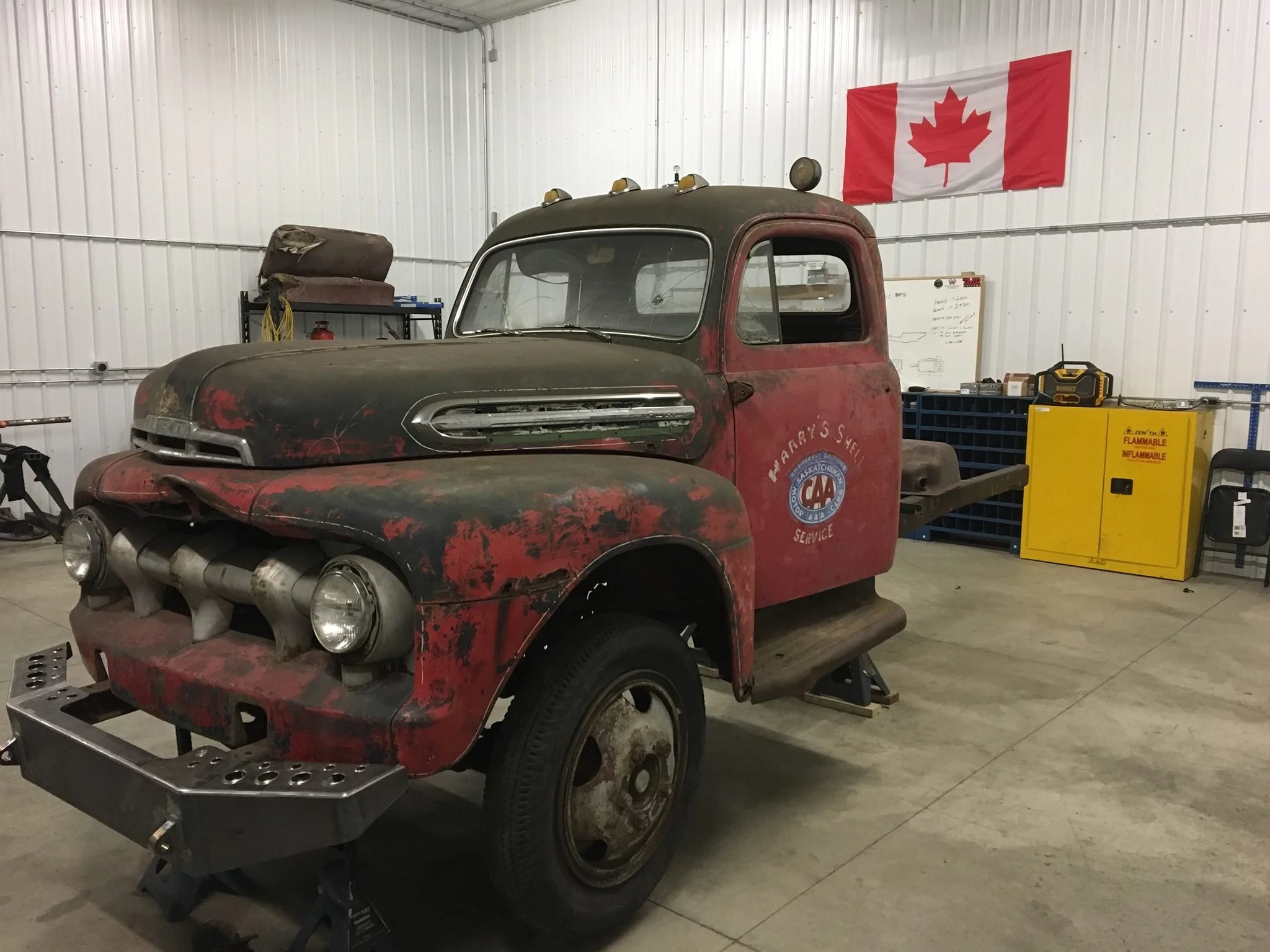
This particular F‑4 spent its last working years as a CAA tow truck in Canada. By the time Chris found it, the bored‑over flathead V8 was seized solid, the transmission leaked like a rusted colander, and the boom on the back had long since been repurposed. It had been sitting for the better part of 30 years, more relic than runner.
Chris has owned this truck for close to a decade, starting and stopping the project whenever work and family allowed. Early progress showed up on his previous channel, VetBuilt, but the build hit pause when he and his wife sold their ranch in Alberta and toured the States—a trip that led directly to a national TV opportunity building vehicles on camera. When that contract ended, Chris went back into business for himself and doubled down on what he actually cares about: honest fabrication, real off‑road use, and teaching what he’s learned. That’s when Flat Fender Customs was born.
What’s going into Blue Bell now
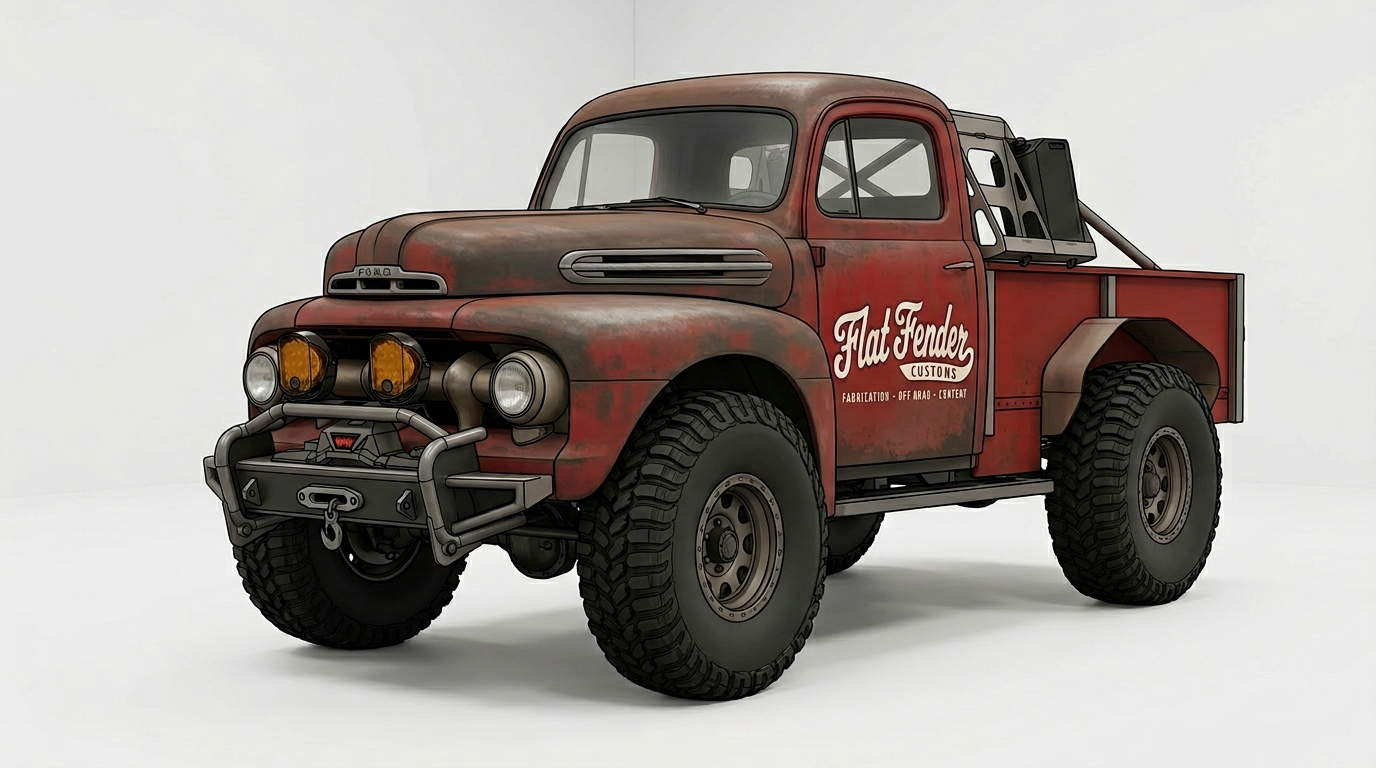
Blue Bell is being reborn as a modern trail and travel rig while keeping its fat‑fendered character. Inside, it’s getting custom PRP suspension seats designed for real off‑road use and long days in rough terrain, not just short trips on tired bench foam. Steering duty is handled by a PSC Big Bore kit that’s already tapped and ready for ram assist, built to keep 39.5‑inch Interco Iroc tires pointed where they need to go when the rocks and ruts start fighting back.
Underneath, Blue Bell will ride on coilovers at all four corners with 14 inches of travel to balance articulation, control, and highway manners. Power will run through a 4L80E transmission and torque converter from Gearstar, with engine management handled by a Holley Dominator X Max system so the drivetrain can be tuned for everything from Tennessee backroads to high‑speed desert sections. Up front, recovery is covered by a Warn VR Evo 12‑S winch, giving the truck the pulling power it needs when trail plans go sideways. Paint and coatings will come from Seymour, tying the whole build together with finishes chosen to handle trail rash and real use instead of just car‑show shine.
Overlanding systems and living out of the truck
Blue Bell isn’t just being built to hit a trail and go home—it’s being built to live out of. The plan includes a full overlanding system: rooftop tent or sleeping solution, onboard storage for tools and spares, water and fuel management, and a clean, serviceable electrical system for lighting, communications, and camp power. For Chris, this isn’t theory; during his time in the military he lived off of and out of vehicles for weeks at a stretch, so designing a truck to actually support life on the road and in the field is second nature. Those components are still open for the right partners in roof systems, storage, power management, fridges, lighting, and recovery gear—brands that want to see their products integrated into a real travel rig and used across multiple seasons, not just parked at a show.
Design and the custom bed
One of the key pieces of this build is the custom bed that will replace the original stake body. That bed will be designed from the ground up in Fusion 360—layout, structure, mounting, storage, and tie‑downs—before a single tube is bent or plate is cut. The bed has to do everything at once: carry spares and gear, support the overlanding setup, package fuel and water safely, and still look like it belongs behind a 1951 fat‑fendered cab, not a generic flat deck.
That design phase isn’t just a detail; it’s the blueprint for how Flat Fender Customs will approach builds going forward. Proper planning and CAD work turn ideas into professional‑grade solutions—without it, builds stay in the hobbyist lane. Every major component on Blue Bell, starting with the custom bed, is being modeled and thought through in Fusion 360 so that parts fit, systems work together, and nothing is just “good enough for camera.”
Where partners can plug in
Some big pieces are still intentionally open. The heart of the truck—engine and axles—is being built around real trail and travel goals. The plan is either a modern Ford Coyote or Godzilla V8 for power, backed by the Holley and Gearstar drivetrain combo already in the works. Out back, Chris is targeting a Spidertrax or equivalent rear axle with a 10‑inch ring gear, paired with a Dana 60 front axle from a 2015+ Ford Super Duty, geared around 4.56 with lockers front and rear so Blue Bell can crawl, climb, and still live on the highway without feeling miserable.
Beyond that, there’s room for the right partners in axles, lockers, steering assist hardware, brake systems, armor, lighting, electrical, storage, overland systems, and the materials and hardware that will bring the Fusion‑designed bed and supporting structure to life. Those gaps are where the right brands can step in, get integrated into the build on camera, and then proven in some of the harshest conditions in North America—from Middle Tennessee to King of the Hammers and all the way up toward the great white north around Whitehorse, Yukon.
With Flat Fender Customs, Chris is bringing together 10 years of military drive, determination, and integrity, 20 years of red seal–level welding, fabrication, and problem solving, and a lifetime of lessons learned in the off‑road and outdoors to make sure Blue Bell earns every bit of its hero status the hard way—on trail.